Adapting Cognitive Focus During Transitions Between Multiplayer Wagering and Dealer-Centric Play

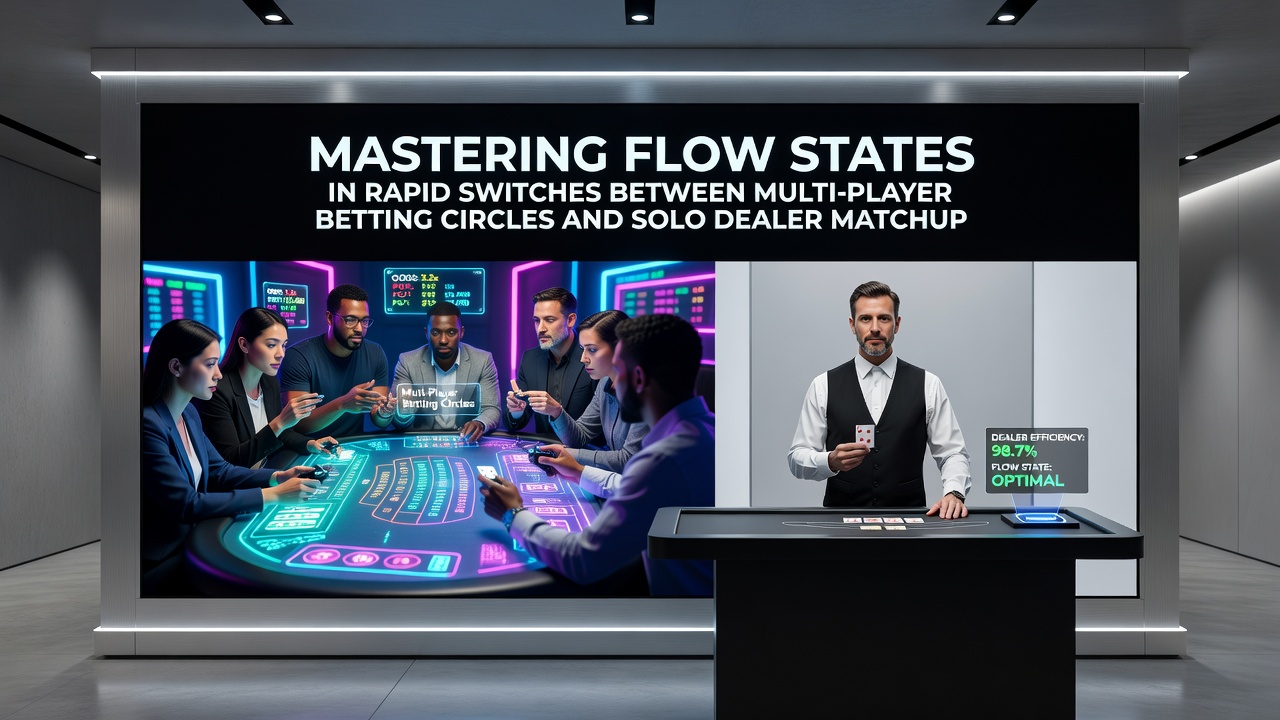
Players frequently encounter situations where they move from group-oriented betting environments with multiple opponents to one-on-one interactions against a dealer, and maintaining concentration through these changes requires specific mental adjustments according to performance psychology research. Flow states, characterized by complete immersion and optimal focus, become disrupted when individuals shift between formats that demand different attention patterns, such as tracking several opponents versus calculating against fixed dealer rules.
Core Elements of Flow in Varied Gaming Contexts
Studies on cognitive engagement show that flow emerges when task difficulty aligns closely with skill level, and this balance shifts notably when participants alternate between collective decision-making at shared tables and solitary choices in dealer matchups. Data from observational analyses in regulated gaming venues indicate that individuals who sustain flow across these formats often employ consistent pre-transition routines, including brief mental resets that realign attention without breaking overall momentum. Researchers at institutions like the University of Nevada have documented how such routines support continuity, particularly when external factors like seating changes or rule variations occur within short timeframes.
Practical Approaches to Mental Transitions
Those who navigate these switches successfully tend to segment their focus into modular components, applying broad awareness in multiplayer settings while narrowing to probability sequences during solo rounds. Evidence from performance tracking in licensed facilities reveals that incorporating timed breathing intervals or visual anchors between sessions helps stabilize heart rate variability, which correlates with sustained engagement levels. Observers note that players who prepare by reviewing position-specific strategies beforehand experience fewer lapses when moving from one format to the other, as this preparation creates a cognitive bridge that preserves accumulated insights.
Environmental and Regulatory Influences in 2026
Regulatory updates taking effect across multiple jurisdictions in June 2026, including adjustments to table minimums in several state-licensed cardrooms, have prompted renewed attention to how environmental pacing affects player concentration. Figures from industry reports compiled by groups such as the American Gaming Association highlight increased foot traffic between table types during peak hours, underscoring the need for adaptive focus techniques amid these operational changes. Academic examinations of similar regulatory shifts in Australian venues have shown that structured transition protocols reduce reported instances of decision fatigue when participants handle rapid format alternations.
Skill Integration Across Formats
Integration of skills from both multiplayer and solo formats builds through repeated exposure paired with reflective review sessions, where individuals catalog decision points without immediate judgment. Research published through the National Center for Responsible Gaming indicates that participants who maintain logs of transition moments demonstrate improved recovery times after interruptions, as these records facilitate pattern recognition over multiple visits. In practice, this method allows for gradual refinement of mental models that accommodate the distinct information loads presented by group betting circles versus direct dealer confrontations.
Supporting Data from Performance Studies
Longitudinal tracking conducted at Canadian research centers focused on recreational gaming behaviors has linked consistent application of modular attention strategies to higher session durations without corresponding increases in error rates. These findings align with broader psychological frameworks on attentional control, suggesting that deliberate practice in switching contexts strengthens neural pathways associated with rapid reorientation. Venue operators have incorporated elements of these insights into player education materials distributed at entry points, providing structured guidance on maintaining engagement across varied table experiences.
Conclusion
Effective navigation of flow states during rapid switches between multiplayer and solo formats rests on preparation routines, environmental awareness, and ongoing skill integration supported by empirical observations from multiple regions. Continued examination of these dynamics, particularly as operational landscapes evolve through mid-2026, offers additional reference points for those seeking measurable improvements in sustained performance across gaming settings.