Ambient Acoustics and Tactical Shifts in Licensed Poker Cash Games

Ambient noise levels in licensed poker venues create measurable effects on player cognition and decision processes, prompting documented strategic adjustments during cash game sessions. Research from cognitive psychology indicates that background sound intensity correlates with changes in attention allocation, risk assessment, and hand selection patterns among participants. Those who study gambling environments have tracked how decibel fluctuations from crowd chatter, music systems, and gaming floor activity influence betting frequencies and fold rates across multiple jurisdictions.
Acoustic Conditions in Regulated Venues
Licensed facilities maintain specific acoustic standards that vary by region and regulatory framework, yet ambient sound often exceeds comfortable thresholds during peak hours. Data collected by the Nevada Gaming Control Board shows average noise levels ranging between 65 and 82 decibels in poker rooms during evening sessions, with spikes occurring near high-stakes tables where spectators gather. Similar measurements reported by the Australian Communications and Media Authority highlight comparable ranges in New South Wales cardrooms, where ventilation systems and adjacent slot machine activity contribute additional layers of sound. Players respond to these conditions by narrowing opening ranges in louder sections of the room while expanding them in quieter corners, according to observational studies conducted at multiple sites.
Cognitive Impacts Documented in Research
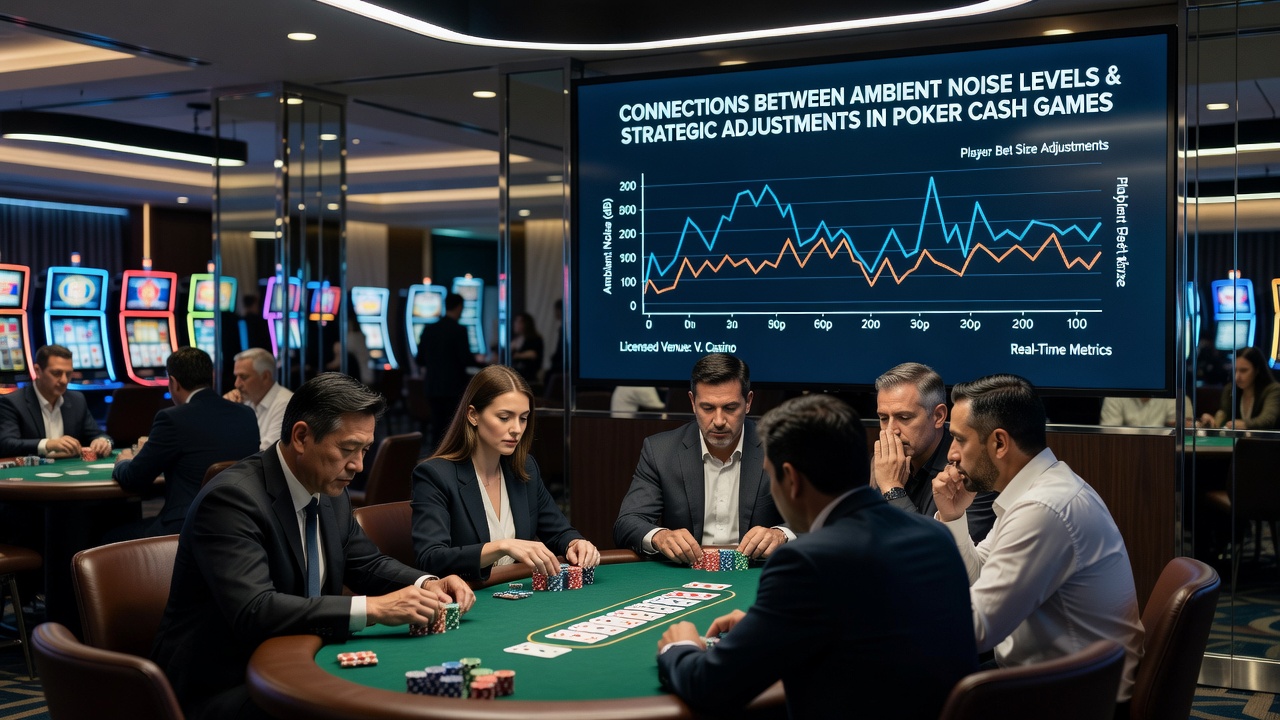
Studies published in the Journal of Gambling Studies demonstrate that sustained exposure to noise above 70 decibels reduces working memory capacity and slows reaction times to betting cues. Participants in controlled simulations adjusted their preflop aggression downward when background sound increased, favoring more passive lines to compensate for diminished focus. Observers note that this pattern holds across skill levels, although experienced players implement compensatory behaviors such as increased table selection and positional awareness to offset the effects. In July 2026, updated acoustic monitoring protocols at several California cardrooms began logging real-time decibel data alongside hand histories, allowing researchers to correlate specific noise events with deviations from baseline strategy metrics.
Player Adjustments Observed in Practice
Cash game participants adapt their approach through several observable mechanisms when noise levels rise. They reduce bluff frequency in high-traffic zones, tighten continuation betting ranges after the flop, and extend decision times on marginal holdings to account for potential distractions. One study tracking sessions at licensed venues in Atlantic City revealed a 12 percent decrease in three-bet volume during periods when ambient sound exceeded 78 decibels. Players also shift toward more defensive postflop play, checking back medium-strength hands more frequently and calling down lighter when facing aggression from opponents seated in noisier areas. These modifications appear consistent regardless of individual bankroll size or session duration.
Venues have introduced targeted mitigation measures that indirectly influence these dynamics. Sound-dampening partitions, directional speaker systems, and designated quiet zones have appeared in newer properties, creating micro-environments where players maintain wider ranges and higher aggression metrics. Regulatory filings from the Malta Gaming Authority indicate that several European operators received approval for acoustic upgrades in 2025, with preliminary reports suggesting measurable stabilization in player decision consistency within treated areas.
Measurement and Data Collection Methods
Researchers employ portable sound level meters alongside video analysis of betting actions to establish direct correlations between acoustic events and strategic outputs. Hand histories tagged with time-stamped decibel readings allow for granular examination of how sudden noise spikes, such as cheers from nearby blackjack tables or announcements over public address systems, coincide with deviations from expected value lines. University-led projects in Canada have compiled datasets exceeding 50,000 hands from regulated Ontario facilities, revealing that noise-induced adjustments concentrate primarily in marginal spots rather than premium holdings. These findings align with broader psychological literature on environmental stressors and executive function.
Regulatory Context and Future Monitoring
Licensing bodies continue to evaluate whether acoustic conditions warrant inclusion in operational guidelines for poker rooms. Current standards focus primarily on security, lighting, and air quality, yet emerging evidence linking noise to altered gameplay has prompted discussion at industry conferences. Facilities that implement proactive sound management may gain competitive advantages in player retention, particularly among recreational participants who report greater comfort in controlled acoustic settings. Ongoing data collection through 2026 and beyond will clarify the extent to which these environmental factors shape long-term profitability patterns across different game structures and stake levels.
Conclusion
Ambient noise levels at licensed poker venues correlate with systematic shifts in player strategy during cash games, as documented through observational research and venue monitoring programs. Participants respond by tightening ranges, reducing aggression, and extending decision intervals when sound intensity rises. Regulatory agencies and academic researchers continue to gather evidence that may inform future venue design standards and operational practices across multiple jurisdictions.