Evaluating Fold Equity Calculations in Short-Stacked Scenarios Within Online Pot Limit Omaha Games
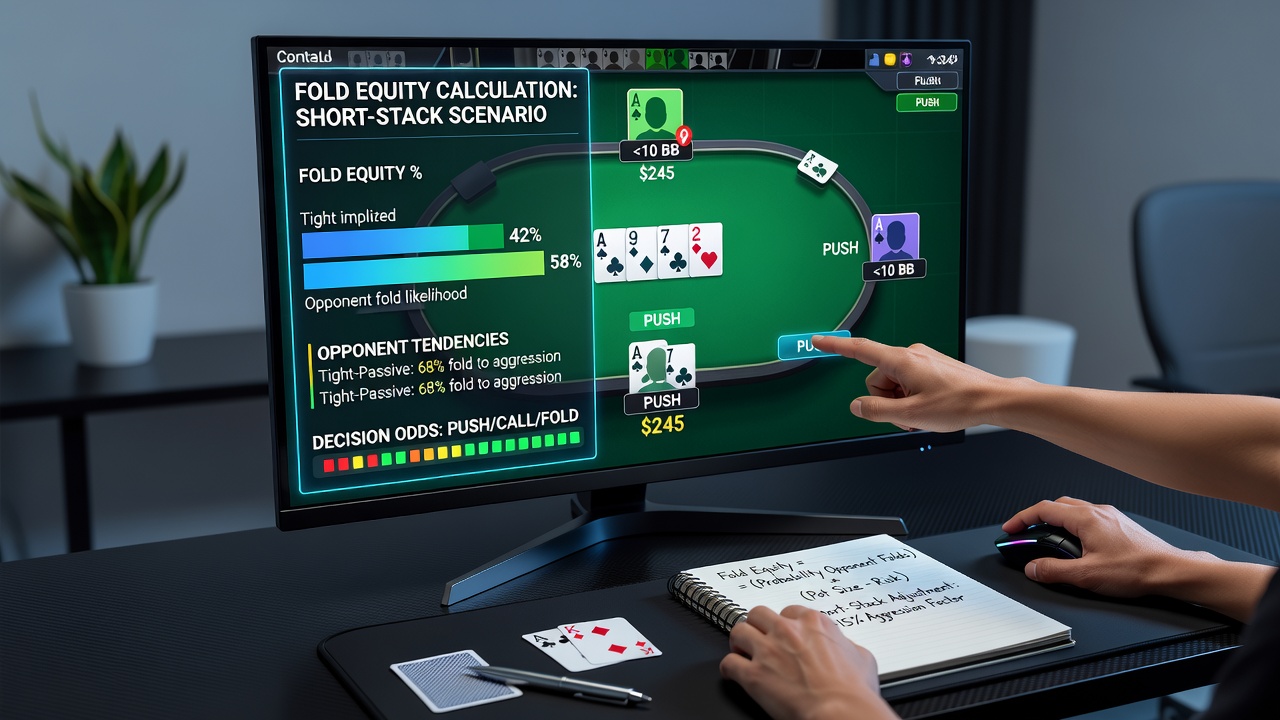
Players in online Pot Limit Omaha often encounter short-stacked situations where fold equity becomes a central factor in decision making, and calculations must account for the game's four-card structure along with betting limits that cap wagers at the current pot size. Data from major platforms shows that short stacks under 30 big blinds appear in roughly 35 percent of hands during peak hours, forcing adjustments to standard equity models that work better in deeper stack environments. Observers note how the interaction between fold equity and raw hand equity shifts when effective stacks drop, because opponents face different pressure levels compared to 100 big blind play.
Core Components of Fold Equity in PLO
Fold equity represents the portion of expected value derived from opponents folding rather than calling or raising, and in Pot Limit Omaha this value changes due to the increased number of possible hand combinations and the frequency of multiway pots. Researchers have documented that short stacks amplify fold equity because smaller absolute bet sizes still represent significant portions of remaining chips, which leads players to fold marginal holdings more readily. Calculations typically multiply the probability of a fold by the current pot size, then add that result to the expected value from showdown scenarios when called.
Those who've studied online databases find that fold rates against continuation bets in short-stacked PLO hover between 42 and 58 percent depending on position and prior action, figures that differ from Hold'em because of the wider range of drawing hands available. Effective calculation therefore requires tracking not just the likelihood of folds but also how often those folds occur against specific bet sizes relative to stack depth. And because Pot Limit rules restrict bet sizing, the all-in threshold arrives sooner, which compresses decision trees and makes precise fold equity estimates more impactful on overall results.
Adjustments for Short Stack Depths
Short-stacked scenarios in online PLO demand modified formulas that incorporate reduced implied odds and heightened sensitivity to immediate pot odds. When stacks fall below 20 big blinds, the value of semi-bluff hands increases because fold equity contributes a larger share of total expectation than it would at deeper depths. Studies of hand histories reveal that players who accurately model these shifts realize higher win rates over large samples, particularly in blind versus blind confrontations where stack-to-pot ratios dictate all-in frequencies.
One approach involves estimating opponent folding ranges based on observed tendencies, then weighting those ranges against the equity of the betting hand when called. This process grows more complex in PLO because each player holds four cards instead of two, expanding the combinatorial space that must be evaluated. Data indicates that software tools used by regular participants can process these calculations in under two seconds per decision, allowing real-time adjustments during play.
Online Platform Dynamics and June 2026 Trends
As of June 2026, traffic patterns on regulated online sites show increased short-stacked play during evening sessions, coinciding with promotions that attract recreational participants who buy in for smaller amounts. These conditions create repeatable spots where fold equity calculations must incorporate table dynamics such as average stack depth and recent showdown tendencies. Platform tracking data further suggests that games with higher average rake percentages see slightly elevated fold rates in marginal spots, because players adjust to preserve chips against the built-in cost.
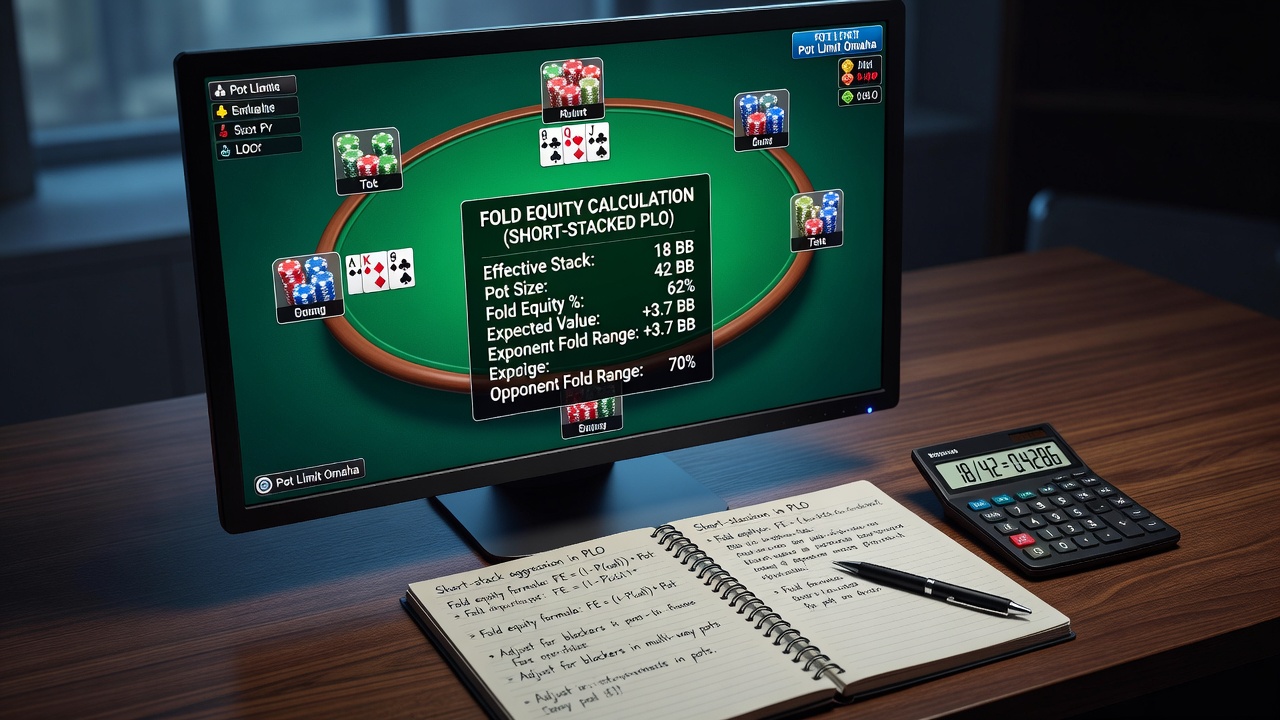
Take one analysis of European player pools that found short-stacked three-bet pots produce fold equity contributions exceeding 60 percent of total EV when the initial raise comes from late position. Such findings align with observations from North American sites where similar patterns emerge once stacks compress below 25 big blinds. Calculations in these environments benefit from integrating real-time statistics on opponent fold-to-three-bet percentages, which many tracking programs now display alongside stack sizes.
Practical Calculation Examples
Consider a scenario where a player holds a strong drawing hand on the flop with 18 big blinds behind and faces a pot-sized bet into a three-way pot. Fold equity estimates begin by assigning folding frequencies to each opponent based on their position and prior aggression, then multiply those probabilities by the pot they would forfeit. Adding the resulting figure to the hand's equity when called produces a more complete picture than equity alone would suggest.
Another case arises in heads-up play where the short stack shoves over a continuation bet with a nut draw plus blockers. Here the calculation weighs the probability that the opponent folds a made hand against the times they continue, which data from large databases places around 48 percent on average. Observers note that small variations in assigned fold rates can swing the overall EV by several big blinds per 100 hands when repeated across many similar spots.
Conclusion
Accurate evaluation of fold equity in short-stacked online Pot Limit Omaha requires integrating probability estimates with observed opponent tendencies and platform-specific data. Research from the Canadian Institute for Gaming Research highlights how depth-adjusted models improve long-term outcomes when applied consistently, while reports from the Australian Gambling Research Centre confirm that short-stack frequencies continue to influence strategy across multiple poker variants. Players who combine these elements with real-time tracking maintain an edge as game conditions evolve.