How Seating Order Influences Equity Realization in Multi-Player Cash Games
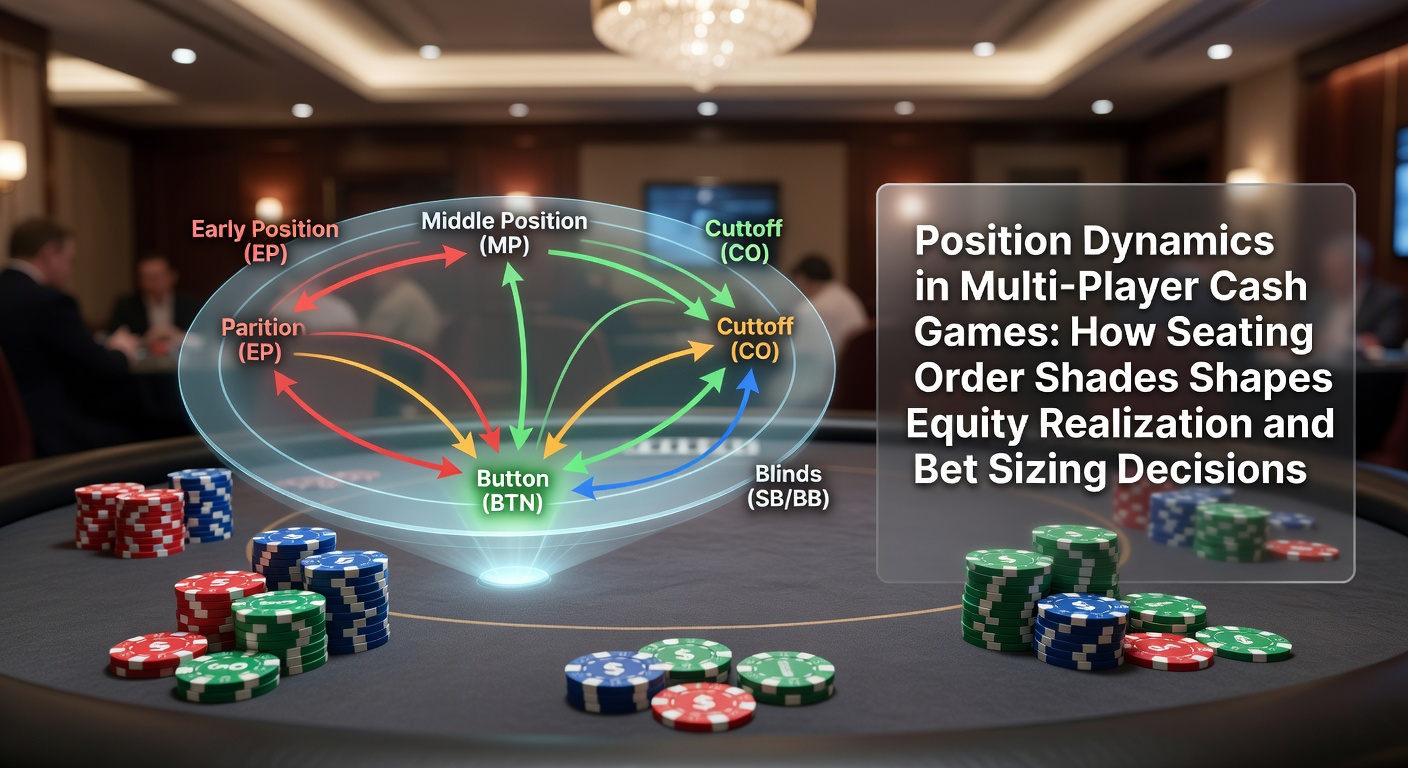
Seating order in multi-player cash games determines how much information reaches each participant before they act, and this factor directly shapes equity realization along with bet sizing choices throughout every hand. Researchers in game theory have examined these dynamics for decades, and data from poker tracking software confirms that late position players convert more of their hand equity into actual profit because they observe opponents' actions first. Early position forces decisions with limited data, which reduces the ability to realize equity even when starting ranges appear strong on paper.
Understanding Position Relative to the Dealer Button
The dealer button rotates clockwise each hand, and players seated immediately after it gain the advantage of acting last on every postflop street. Those in early position must commit chips before seeing how the rest of the table responds, while middle position sits between these extremes and late position, including the cutoff and button, collects maximum information. Studies of large cash game databases show that button players realize roughly 10 to 15 percent more equity on average than under-the-gun players in identical starting hands. This gap arises because late position allows selective aggression and better pot control once community cards appear.
Equity Realization Patterns Across Different Seats
Equity realization measures how much theoretical hand strength converts into expected value once postflop play begins, and seating order exerts strong influence over that conversion rate. Observers note that players in late position frequently check back marginal made hands or execute delayed continuation bets that extract value from weaker ranges, moves unavailable to those acting first. In contrast, early position participants often face difficult decisions after multiple opponents have already checked or bet, which compresses their ability to realize equity on hands that require multiple streets of value. Data from major online poker networks indicates that suited connectors and small pairs perform significantly better from the cutoff than from early seats because position multiplies the value of implied odds.
Bet Sizing Adjustments Based on Seat Location
Bet sizing decisions shift noticeably depending on whether a player acts before or after opponents. Late position allows smaller bet sizes to achieve similar fold equity because the information advantage discourages opponent calls, whereas out-of-position bettors commonly use larger sizes to deny equity and protect vulnerable holdings. Research published through academic channels on decision trees in imperfect information games supports these patterns, and players who adjust sizes according to position demonstrate higher long-term return rates in tracked sessions. Those in early position often face larger defensive bets from late position aggressors, which further reduces equity realization on marginal holdings that might continue profitably with more information.

Multi-Player Dynamics and Range Construction
In games with six or more participants, position effects intensify because more opponents remain to act behind early position players. Range construction therefore tightens in early seats to account for the increased likelihood of facing raises from late position, while late position ranges expand to include speculative hands that realize equity through position and implied odds. Figures from regulatory reports in Nevada reveal that cash game rake structures reward positionally aware play, since players who frequently occupy late seats generate higher hourly rates despite identical starting hand distributions. The reality is that multi-way pots amplify these differences, as out-of-position players must navigate additional decision points without the benefit of seeing how the field responds.
Practical Examples from Tracked Cash Game Sessions
Take one tracked player who moved from early position to the button over several thousand hands; data shows a measurable increase in equity realization on the same hand types once late position became available more often. Another case involved a regular who tightened early position opening ranges by 12 percent after reviewing position-specific statistics, and subsequent results indicated improved overall return because fewer marginal holdings reached difficult postflop spots. Observers note that bet sizing also adapts in these scenarios, with late position players using smaller probes to define opponent ranges while early position players employ larger protection bets to offset information deficits.
Conclusion
Seating order remains a core structural element that shapes both equity realization and bet sizing decisions in multi-player cash games, and comprehensive analysis of large datasets continues to validate these position-based patterns across different player pools and stake levels. Those who study position dynamics consistently adjust their strategies to maximize information advantages and minimize equity leakage when forced to act early.