Multiplayer Table Interactions and Their Impact on Strategic Choices in Draw and Hit Scenarios

Multiplayer environments in casino card games create layers of observation that shape how participants adjust their approaches to hit decisions in blackjack-style games and draw mechanisms in variants like video poker or seven-card draw, and data from regulated venues shows these interactions occur consistently across table types because players see exposed cards and reactions in real time.
Core Mechanics of Observation in Shared Settings
Participants at a single table track the sequence of hits or draws made by others, which supplies information about remaining deck composition while they weigh their own options, and this process unfolds because each action reveals partial data that feeds into probability calculations performed mentally or with basic counting methods. Researchers at institutions such as the University of Nevada Las Vegas Center for Gaming Research have documented how these visible choices accumulate across rounds, leading players to modify thresholds for hitting on marginal totals or pursuing specific draws based on cards already removed from play by neighboring seats.
Tables with four or more active positions accelerate this information flow compared with heads-up arrangements, since more cards enter the discard pile per round and the pace of decisions quickens when multiple participants act in sequence, yet the same core principle applies across game formats where draw selections replace hit buttons.
Adaptation Patterns in Blackjack Hit Sequences
In blackjack, a player holding a soft 16 often watches whether the person to their left takes a hit on a stiff hand before committing to their own action, and this visual cue combines with the known dealer upcard to refine the expected value of standing versus hitting. Figures released by the Nevada Gaming Control Board through July 2026 indicate that tables with higher average occupancy record elevated rates of deviation from basic strategy charts precisely during these moments of shared visibility, as individuals incorporate the additional data points without altering the underlying mathematical framework.
Seating position further modulates the effect because early-position players supply information to later seats while receiving less reciprocal data themselves, creating an asymmetry that experienced participants account for by adjusting their initial betting units or tightening their hit criteria when they occupy the anchor spot.
Draw Mechanism Adjustments in Poker Variants
Draw poker formats introduce parallel dynamics when players discard and receive replacements in view of the group, allowing remaining participants to update assessments of outs and pot odds based on the specific ranks and suits removed from contention. One study released by the Canadian Institute for Gaming Research tracked session logs at licensed cardrooms and found measurable shifts in draw frequency when multiple opponents remained active, particularly on draws to straights or flushes where discarded cards altered the probability matrix for everyone still contending.
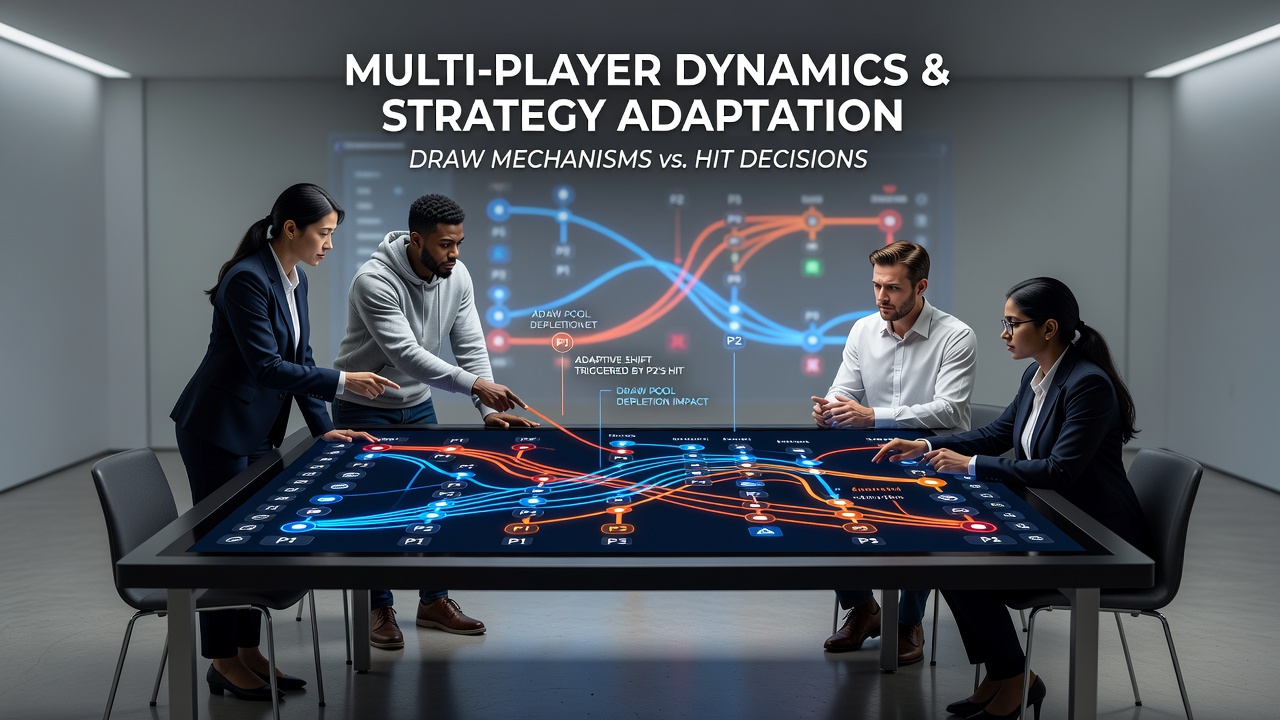
These adaptations occur because the visible discards function as negative information that narrows the range of possible holdings, prompting conservative draws when key cards have already left the deck or aggressive ones when opponents have passed on high-value ranks.
Cross-Game Transfer of Learned Behaviors
Regular visitors to regulated venues frequently move between blackjack pits and poker rooms within the same property, carrying over patterns of observation that influence subsequent decisions in the alternate game format. Data compiled by the Australian Gambling Research Centre shows that individuals who routinely play both game families demonstrate faster convergence toward group-adjusted strategies than those who specialize in a single title, because the habit of scanning table actions transfers across rule sets even when the specific mechanics of hitting versus drawing differ.
Regulatory filings from the Malta Gaming Authority further note that session length correlates with the degree of adaptation, as longer exposure to the same table cohort supplies repeated opportunities to test revised thresholds against actual outcomes.
Conclusion
Multiplayer dynamics therefore function as an embedded information layer that participants integrate into existing decision frameworks for both hit sequences and draw selections, and records from multiple jurisdictions confirm these adjustments occur without requiring changes to core game mathematics. Continued collection of table-level metrics through 2026 and beyond will clarify the magnitude of these effects across varying occupancy levels and regulatory environments.