The Development of Advanced Shuffling Protocols in Multi-Deck Blackjack Environments at Regulated Gaming Facilities
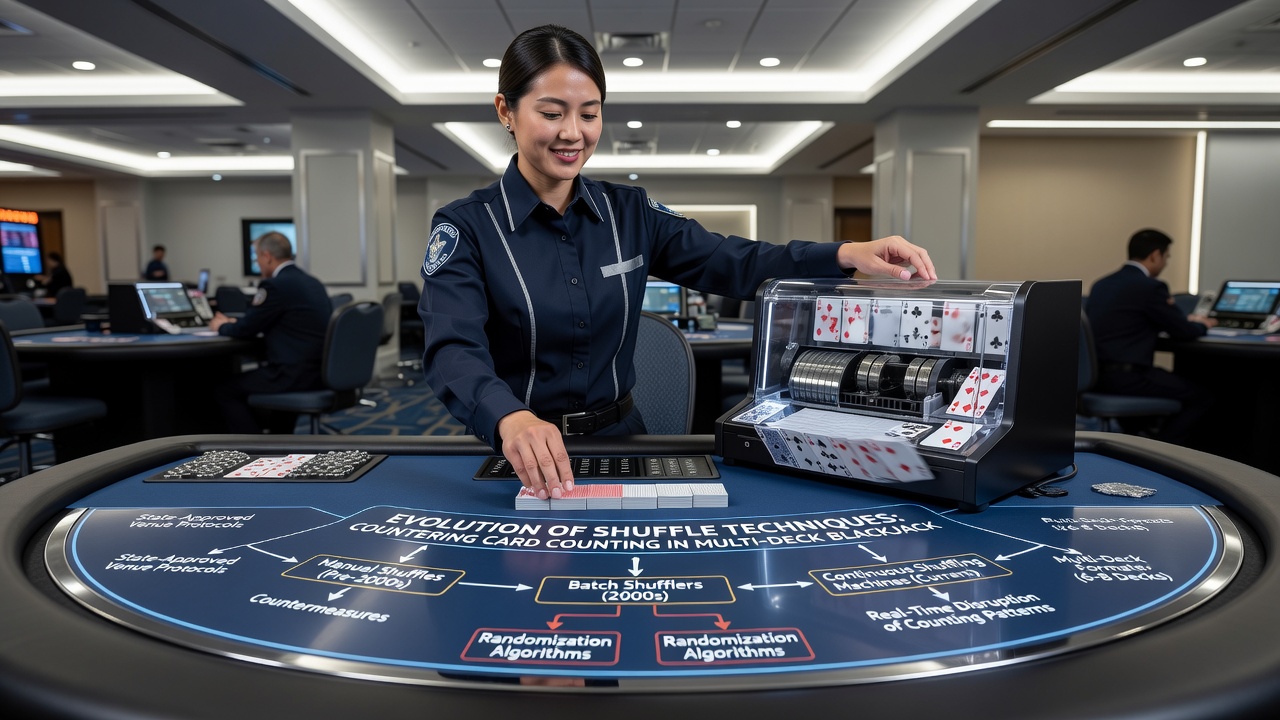
Shuffle techniques in multi-deck blackjack have undergone systematic changes at state-approved venues since the expansion of six-deck and eight-deck formats became standard across regulated markets, and these adjustments directly address identifiable patterns associated with card counting methods. Early reliance on manual shuffling gave way to mechanical devices as operators observed that traditional procedures allowed greater deck penetration, which in turn provided measurable advantages to players tracking high and low card distributions. Data from regulatory oversight bodies shows that by the early 2000s most large-scale facilities had introduced automatic shufflers to limit continuous play through the same set of cards.
Historical Context of Counting Patterns and Initial Responses
Card counting systems gained documented traction in the 1960s and 1970s, yet the shift to multi-deck games at licensed establishments created new variables because the proportion of high cards remaining in the shoe became harder to track over longer sequences. Facilities responded by shortening the playable portion of each shoe, and researchers at institutions such as the University of Nevada, Las Vegas tracked how reduced penetration altered expected value calculations for players employing count-based strategies. Those records indicate that venues in Nevada and New Jersey began experimenting with more frequent manual breaks in the 1980s, cutting shoes at shallower depths to keep running counts from reaching statistically significant thresholds.
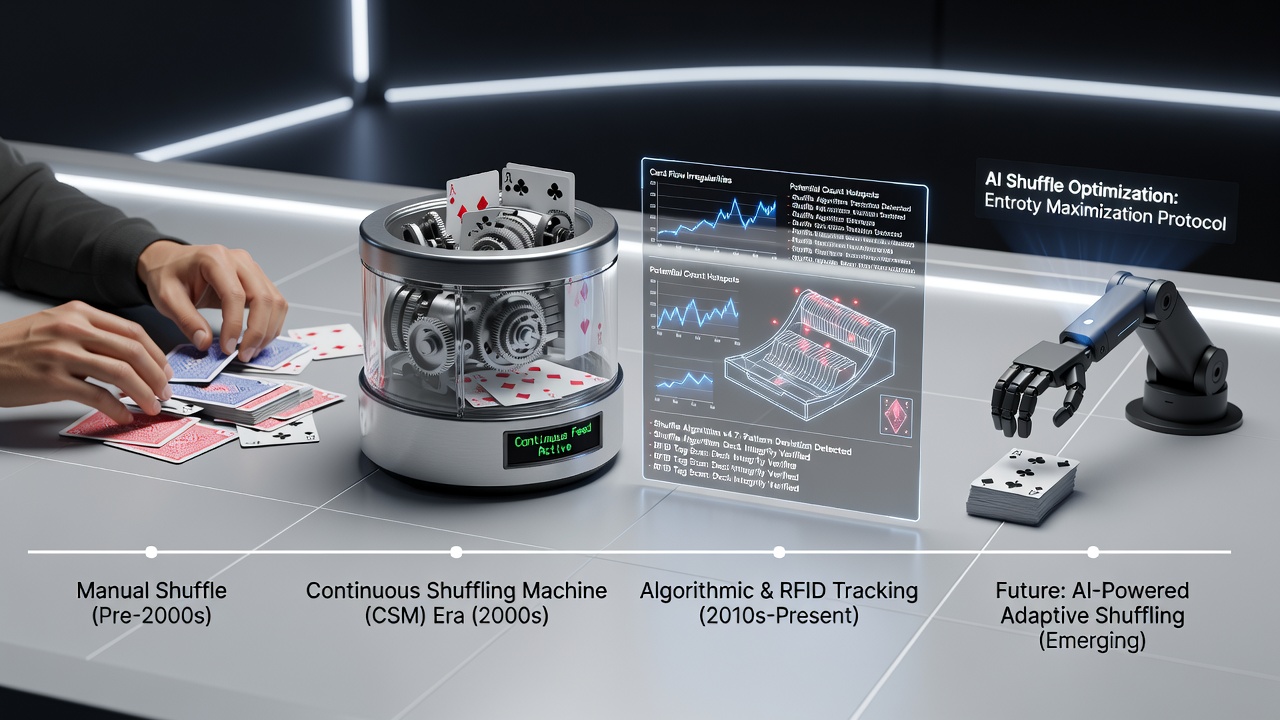
Automatic shuffling machines entered widespread use during the 1990s, and operators noted that these devices randomized cards between rounds without requiring dealers to pause for lengthy hand shuffles. Continuous shuffling machines, introduced shortly afterward, kept the entire deck in constant motion so that removed cards returned to the random pool almost immediately. Figures released by the Nevada Gaming Control Board confirm that properties adopting continuous systems reported measurable declines in the effectiveness of sequential counting approaches once deck penetration dropped below the levels previously available in cut-shoe games.
Technical Progression of Shuffle Mechanisms
Modern multi-deck formats at state-approved venues incorporate random number generator algorithms that determine insertion points and shuffle cycles, and these systems replaced earlier mechanical rollers that followed fixed patterns. Manufacturers refined batch shuffling sequences so that cards from different sections of the shoe interleave in non-repeating orders, and independent testing laboratories verify that output distributions align with regulatory standards for uniformity. One study published by the International Gaming Institute documented how these algorithmic adjustments reduced the correlation between removed cards and remaining composition compared with earlier electromechanical models.
Venues operating under oversight from multiple jurisdictions, including those in Atlantic City and certain Canadian provinces, adopted hybrid protocols that combine periodic full-shoe randomization with continuous feed mechanisms. The result limits the window during which a running count can accumulate meaningful data, and compliance reports submitted to state regulators show consistent application of these procedures across approved tables. In June 2026 several facilities in jurisdictions that updated equipment standards the previous year completed integration of next-generation continuous systems designed to further compress any remaining exploitable sequences.
Regulatory Oversight and Standardization Across Jurisdictions
State gaming commissions require periodic certification of shuffle equipment, and testing protocols evaluate both randomness and resistance to known tracking methods. Auditors examine cycle times, insertion algorithms, and maintenance logs to confirm that devices continue to meet performance thresholds established when the equipment received initial approval. Reports filed with the New Jersey Division of Gaming Enforcement illustrate how operators document shuffle frequency and penetration limits as part of routine compliance filings.
Industry associations such as the American Gaming Association compile aggregate data from member properties, and these summaries reveal that continuous shuffling installations now predominate in high-volume multi-deck environments. The pattern holds across different regulatory frameworks because each jurisdiction maintains similar technical specifications for approved devices. Observers note that facilities must demonstrate through independent laboratory results that any new shuffle technology maintains statistical independence between successive rounds before deployment on the gaming floor.
Operational Integration at Licensed Venues
Dealers at regulated tables receive training on machine calibration and error detection, and supervisors monitor shuffle cycles to ensure equipment functions within prescribed parameters. When anomalies occur, protocols require immediate removal of the device and substitution with a certified backup unit. These procedures appear in internal operations manuals reviewed during state inspections, and the emphasis remains on maintaining consistent randomization rather than on any single counting countermeasure.
Multi-deck blackjack formats continue to evolve as manufacturers introduce modular systems capable of handling varying numbers of decks without mechanical reconfiguration. State-approved venues evaluate these systems through pilot programs before full-scale adoption, and approval hinges on verified performance metrics submitted to regulatory staff. The cumulative effect across markets has been a standardized reduction in the playable depth of each shoe, achieved through equipment design rather than discretionary cut-card placement alone.
Conclusion
Shuffle technique evolution in multi-deck blackjack at state-approved venues reflects ongoing adaptation to documented patterns associated with card counting, driven by equipment certification requirements and operational data collected across multiple regulatory environments. Continuous and algorithmic systems now form the baseline standard, supported by routine testing and compliance documentation that state agencies maintain for public record. These measures operate within the broader framework of licensed gaming oversight, where technical specifications receive review on a recurring basis to align with current multi-deck configurations.