Tracing the Development of Standardized Blackjack Payout Structures in Atlantic City Establishments Since the 1970s
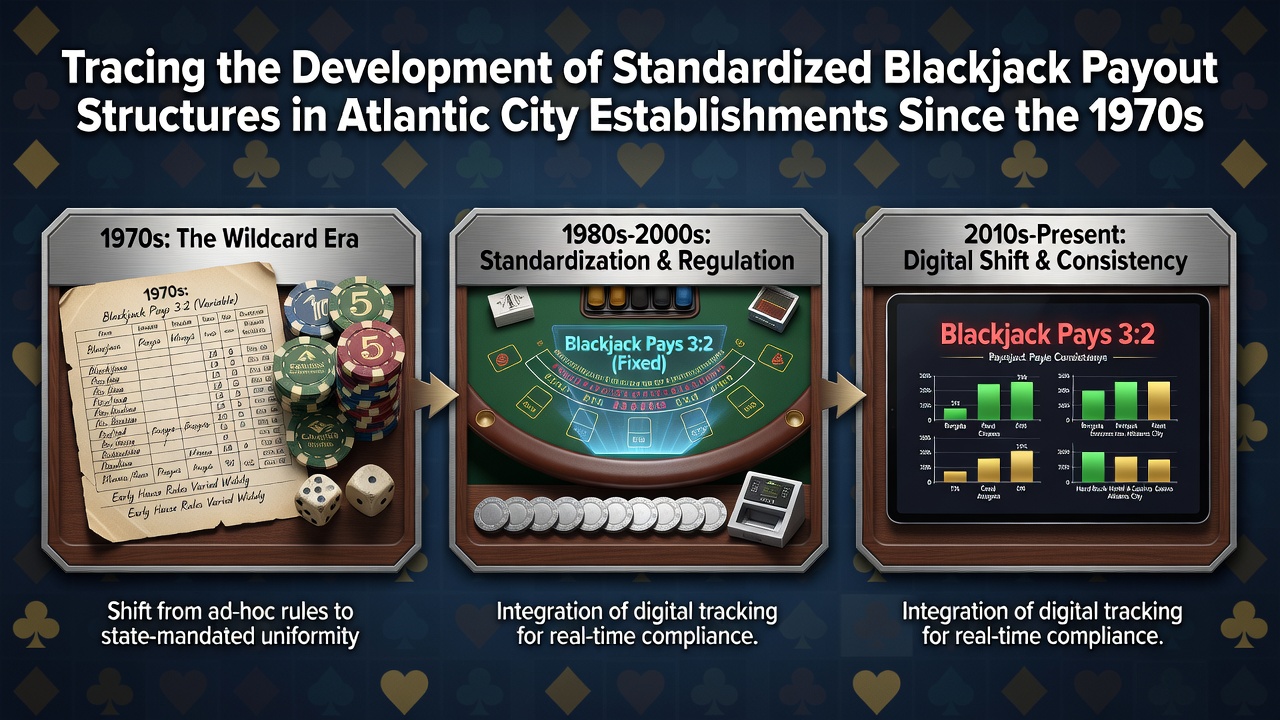
Atlantic City casinos opened their doors in 1978 under strict oversight from the New Jersey Casino Control Commission, and blackjack payout structures started with the familiar 3:2 ratio on natural blackjacks that became the baseline across most tables. Observers note that these early rules mirrored practices already common in Nevada yet adapted quickly to local regulations which emphasized player protection alongside house revenue goals. Data from the period shows that nearly every establishment maintained consistent 3:2 payouts while limiting deck penetration and restricting double-down options in ways that kept the overall edge predictable for both sides.
By the early 1980s operators began testing minor variations such as allowing surrender at select tables and adjusting insurance rules, yet the core payout ratio stayed locked in place because regulators required prior approval for any structural change. Researchers at gaming studies programs documented how these incremental tweaks rarely altered the fundamental mathematics of the game while still giving casinos room to fine-tune their margins through rule combinations rather than direct payout cuts.
Regulatory Pressures and Rule Adjustments Through the 1990s
The 1990s brought increased competition among Atlantic City properties and this environment prompted some venues to experiment with 6:5 payouts on blackjacks at lower-limit tables. Figures from the New Jersey Division of Gaming Enforcement reveal that a handful of casinos introduced these modified payouts around 1995 though the practice remained limited because the Commission demanded clear signage and player notification. Those who've studied the era point out that the shift raised the house edge by roughly 1.4 percent on affected tables and triggered early conversations about whether standardized ratios should be codified to prevent confusion.
Multi-deck shoes became standard during this decade while continuous shuffling machines appeared at a few properties, and each technological addition interacted with payout structures to influence overall game speed and expected value. Experts have observed that casinos balanced these tools carefully since any combination that appeared overly aggressive risked regulatory scrutiny or player migration to competitors who retained the traditional 3:2 structure.

Standardization Efforts in the 2000s and 2010s
Into the 2000s industry groups and regulatory bodies collaborated on clearer guidelines that encouraged uniform payout disclosure across all Atlantic City floors. According to reports from the New Jersey Casino Control Commission, operators were required to post payout information prominently and any deviation from 3:2 had to carry explicit warnings that highlighted the difference in player return. This period also saw the widespread adoption of 8-deck shoes paired with 6:5 payouts at many $10 minimum tables while higher-limit pits preserved 3:2 as a premium offering.
What's interesting is how these dual structures persisted side by side for years because data indicated that recreational players often selected games based on table minimums rather than payout ratios alone. Studies conducted by university-affiliated gaming research centers found that clear signage and consistent rule sets across properties reduced disputes and improved overall compliance rates, which in turn supported the push toward greater standardization.
Current Landscape and Developments Approaching June 2026
Today Atlantic City establishments operate under a framework that permits both 3:2 and 6:5 payouts provided operators follow detailed disclosure rules set by the Commission. Data indicates that roughly half the blackjack tables citywide still offer the traditional ratio at higher denominations while lower-limit games frequently use 6:5 to maintain revenue targets. Observers note that electronic table games and stadium-style setups have introduced hybrid payout models yet these remain subject to the same approval processes that have governed physical tables since the 1970s.
As June 2026 approaches, regulatory filings show no major planned alterations to existing payout standards though ongoing reviews continue to examine how technological advances such as digital dealing interfaces might affect game integrity and player expectations. Research from North American gaming associations highlights that Atlantic City's approach has influenced other jurisdictions by demonstrating how controlled variation paired with transparency can coexist without eroding public trust.
Conclusion
The evolution of blackjack payout structures in Atlantic City reflects a sustained balance between operator flexibility and regulatory oversight that began with the first casinos in 1978. Consistent documentation requirements, approval processes for rule changes, and clear signage have together shaped a landscape where both 3:2 and 6:5 options appear under defined conditions. Those who track these developments recognize that the emphasis on transparency established decades ago continues to guide practices today and into the coming years.